Design Elements
The raw materials
Design Foundations · LEARN
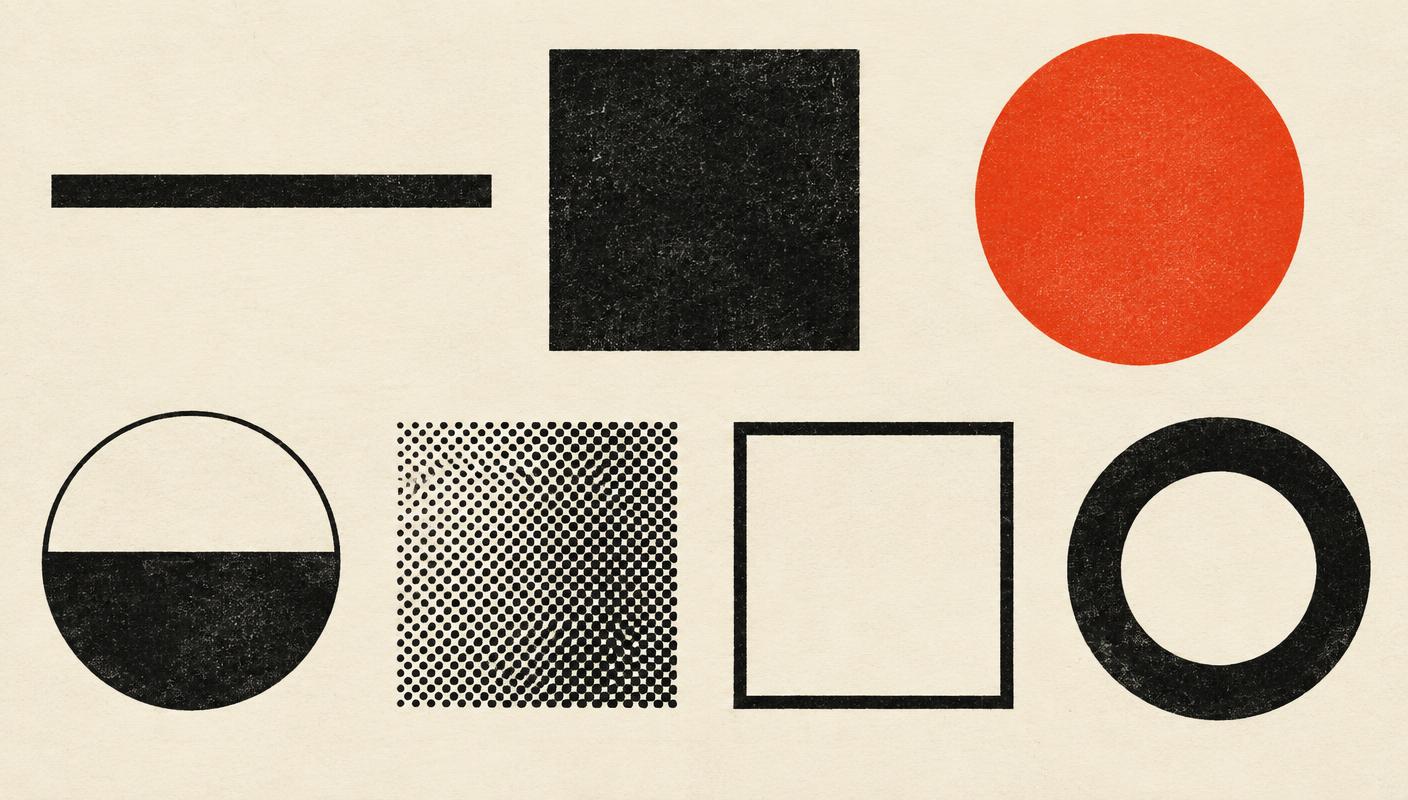
The elements are what a design is physically made of. Line is the most basic: it leads the eye, divides space, and sets a tempo. Shape is an area enclosed by a boundary — geometric shapes feel constructed and stable, organic shapes feel natural and loose. Color carries mood and meaning faster than any other element, and value — the range from light to dark — is what gives a composition depth and legibility.
Texture is the suggestion of a surface, real or implied: grain, noise, and pattern make flat work feel physical. Space is the element beginners ignore and professionals prize — the empty areas around and between things are doing as much work as the things themselves. Form is the illusion of three dimensions on a flat surface, built from light, shadow, and perspective.
Visual examples
Line
Leads the eye, divides space, sets tempo
Shape
An enclosed area — geometric or organic
Color
Hue, value, and saturation — the fastest carrier of mood
Value
The light-to-dark range that creates depth and legibility
Texture
The suggestion of a surface — grain, noise, pattern
Space
The empty areas working as hard as the filled ones
Form
The illusion of three dimensions on a flat surface
 View Design Principles →