Color Theory Basics
Hue, value & saturation
Color · LEARN
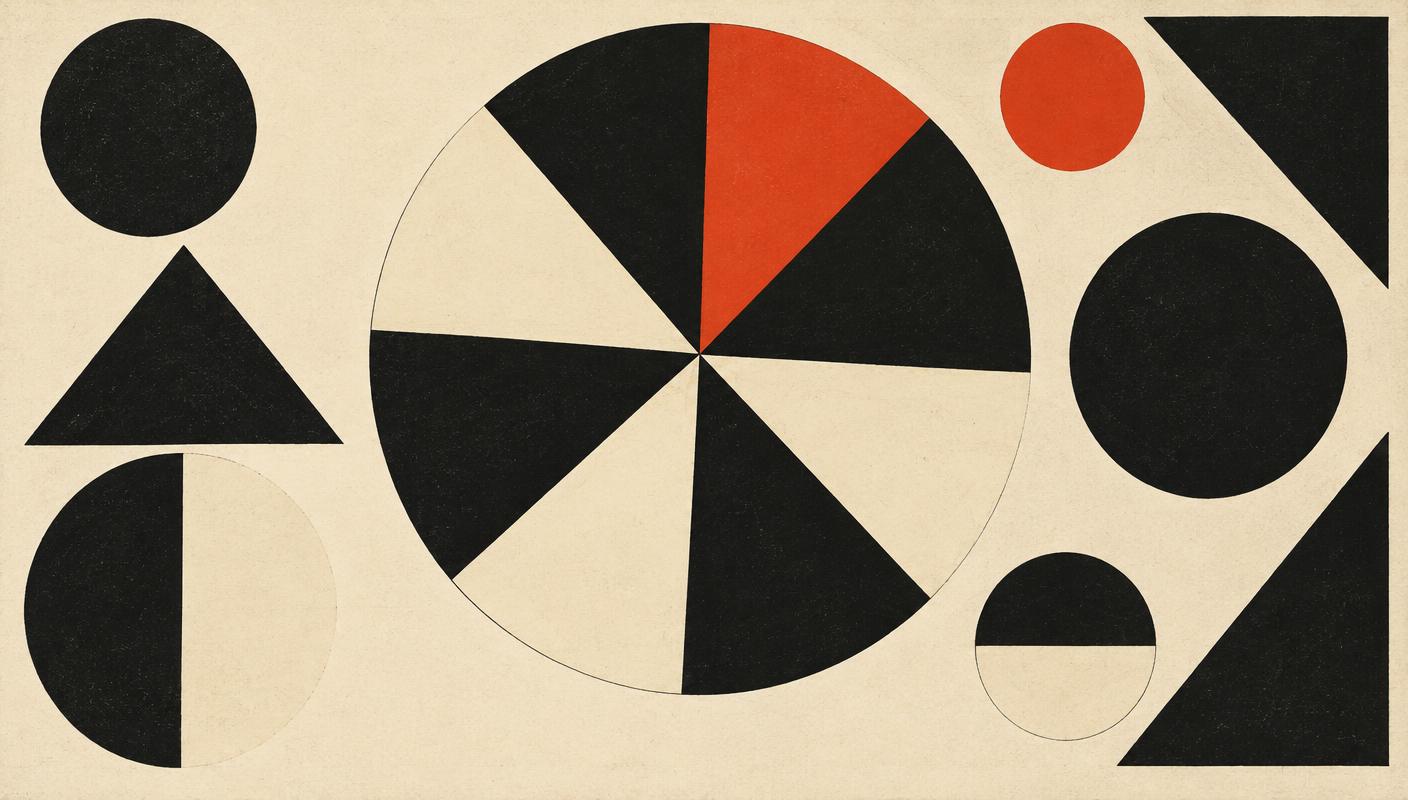
Every color can be described by three properties. Hue is the color's name on the wheel — red, orange, yellow, green, blue, violet. Value is how light or dark it is, from near-white tints to near-black shades. Saturation (also called chroma or intensity) is how vivid or grayed-out it appears.
The color wheel itself comes from Isaac Newton's experiments with light, arranged so that opposite colors cancel to neutral when mixed. Three properties in hand, most color problems become describable: a muddy design is usually a value problem, a garish one a saturation problem, and a confused one a hue problem.
The vocabulary of color
- Describing any color by hue, value, and saturation
- Mixing tints, shades, and tones
- Reading color wheels and value scales
- Additive (screen) versus subtractive (print) color
- Warm versus cool color judgment
- Neutralizing and brightening a color deliberately